

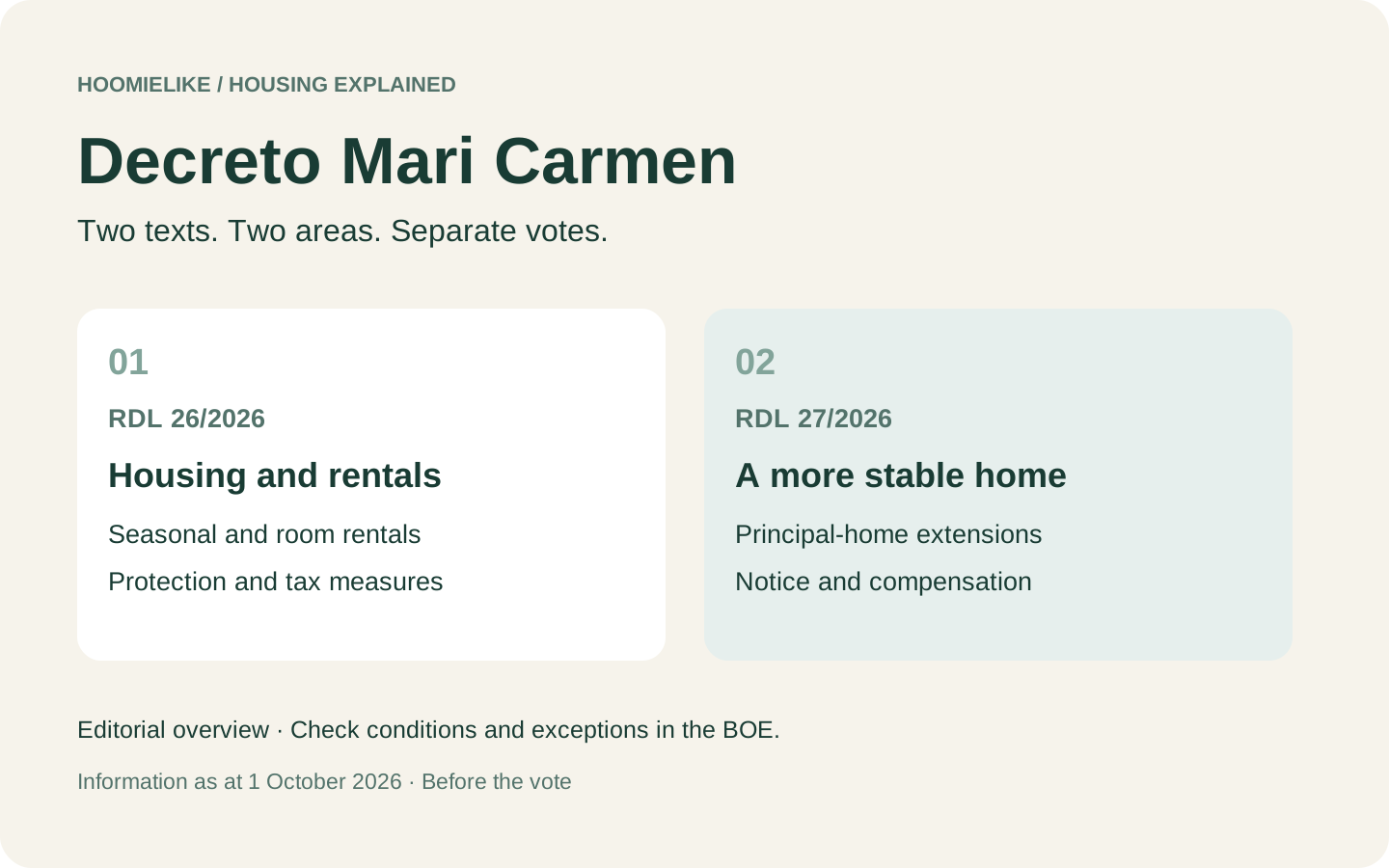
Updated on 1 October 2026, before the parliamentary vote. The package popularly known as the decreto Mari Carmen consists of two separate royal decree-laws, both dated 29 September. RDL 26/2026 was published on 30 September and enters into force on 1 October, subject to its exceptions; RDL 27/2026 is published on 1 October and enters into force on 2 October. Parliamentary ratification is expected on Friday 2 October, according to RTVE. Government approval, BOE publication and parliamentary ratification are different stages.
💬 How to read this article · These boxes contain our practical explanation and editorial interpretation, not literal quotations from the BOE. The references link to legislation and published reporting. The parliamentary status is stated as at the date above.
Why is it called the Mari Carmen decree, and what happened in Sol?
Mari Carmen Abascal's eviction and the subsequent protests explain the package's popular name. RTVE reported on the start of the Puerta del Sol encampment on 27 September. Its dated report, linked below, includes real images of the protest. This article's cover photograph provides Madrid city context.
Context and planned voting date
- RTVE · Start of the Sol encampmentReport dated 27 September 2026, with images of the protest. Spanish source.
- RTVE · Two decrees and Friday's votePublished on 29 September 2026. Spanish source.
What does the first Mari Carmen housing decree contain?
Royal Decree-law 26/2026 brings together eviction protection in the specified circumstances, restrictions on certain housing acquisitions until the end of 2028, tax incentives, public housing measures and changes to seasonal and room rentals. It does not ban every company purchase or every eviction: Articles 1 and 2 set conditions and exceptions. The Council of Ministers summary explains the package's broader objectives.
It also provides an extraordinary extension of up to two years for certain principal-home tenancies, on request and subject to conditions, including being up to date with rent and having paid on time each month during the preceding eight months. For annual rent reviews until 31 December 2027, increases are barred where rent exceeds the applicable reference-system ceiling. In other cases a new agreement is possible; without one, the increase is capped at 2%. This is not a universal rent freeze.
Source for this section
- BOE · Real Decreto-ley 26/2026Articles 1–4; fifth, sixth and eleventh final provisions. General summary: Council of Ministers, 29 September.
I rent out a room: does this benefit me, and how does it affect me?
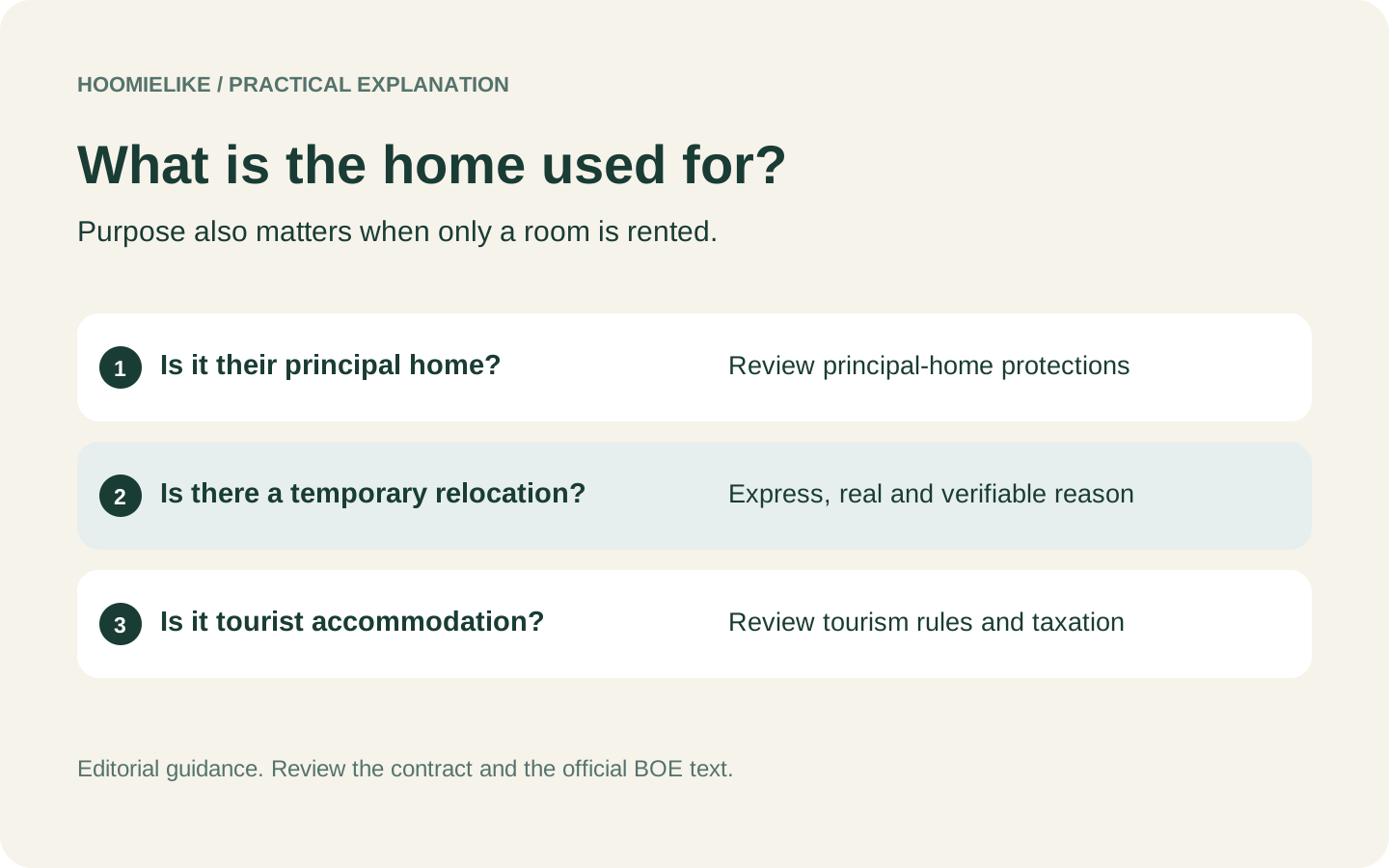
The reform expressly includes the rental of a room or part of a home within principal-home and temporary residential tenancies. Classification depends on the housing need it meets, rather than simply on renting only part of an apartment. The combined rent under simultaneous partial tenancies cannot exceed the rent under the whole-property tenancy. In designated stressed housing market areas, the whole-property rent or, if there is no such contract, the combined room rents must comply with the applicable limits.
💬 For the landlord · Our reading is that you will need to review how each room is actually used, the supporting documents and the apartment's combined rents. If the resident uses the room as their principal home, a short contract alone does not establish a temporary tenancy. Explicit inclusion provides tenant protections and requires operators to align their contracts and processes.
Source for this section
- BOE · Urban Tenancies ActArticles 2 and 17.9, amended by Article 3 of RDL 26/2026.
I rent by the month: is an eleven-month contract still a seasonal tenancy?
The new rules require temporary relocation from the tenant's usual home for a justified, verifiable reason. The contract must expressly state that reason, and the landlord bears the burden of proving it. If the contract lacks a properly stated temporary reason, the principal-home regime applies from signing. Temporary tenancies must last more than 31 days and, generally, no longer than twelve months, unless the temporary reason continues.
Going beyond twelve months without justification, or entering into more than two consecutive temporary contracts between the same parties for the same home, means the first is treated as a principal-home tenancy. Successive temporary contracts for the same property also face an annual percentage rent-increase limit linked to the IRAV.
💬 In practical terms · Eleven months is not an automatic safeguard. A documented relocation for a work project or study programme may explain a temporary stay; the actual circumstances and evidence need checking. Where the housing need is ongoing, our reading is that the contract should reflect it.
Source for this section
- BOE · Urban Tenancies ActArticles 2.3, 7.2, 9 bis and 17.8. The IRAV annual-review index is distinct from the rental-price reference system.
I operate a holiday rental: what changes for me?
The reform continues to exclude certain rentals governed by sector-specific tourism rules from the Urban Tenancies Act, but says their maximum duration, set by the competent authorities, cannot exceed 31 days. Meeting that duration does not replace licensing or other tourism requirements. The decree also amends VAT, providing a 10% rate for tourist lettings covered by the reform, with effect from 1 December 2026.
💬 For the tourism operator · Review booking duration, the applicable tourism regime and taxation separately. Our reading is that switching to monthly bookings or describing a listing as “seasonal” requires checking the accommodation's actual purpose; changing the label does not resolve those issues by itself.
Source for this section
- BOE · Real Decreto-ley 26/2026Article 3.4: revised Article 5.e of the Urban Tenancies Act. Article 7: VAT amendments effective from 1 December 2026.
What does the second decree do? Do all rentals become indefinite?
Royal Decree-law 27/2026 amends Article 10 of the Urban Tenancies Act to strengthen continuity for principal-home rentals. After the minimum five years — seven where the landlord is a legal entity — it establishes successive five- or seven-year extensions unless valid notice of non-renewal is given. The general notice period is six months for the landlord and two for the tenant, subject to transitional rules.
A landlord's non-renewal may trigger compensation: at least twelve months' rent for a comparable home, and never less than one month's rent for each year of residence. Exceptions include specified occupation needs, another suitable home available to the tenant, a new contract or offer meeting the legal conditions, and the landlord's evidenced vulnerability. Compensation is also excluded in the statutory case where an obligatory extension is available to the tenant.
💬 In practical terms · The principal home receives stronger continuity protections, with conditions for non-renewal. A genuine temporary stay does not automatically become a five- or seven-year tenancy. If it should be classified as a principal-home rental, however, this regime will also need examining.
Source for this section
- BOE · Real Decreto-ley 27/2026Sole article: revised Article 10 of the Urban Tenancies Act; sole transitional provision and second final provision.
I already have signed contracts: do I need to change them today?
Seasonal contracts predating 1 October retain their previous regime until the agreed end date, without extension under that regime; a renewed temporary tenancy follows the new rules. For existing principal-home contracts, the second decree sets specific transitional arrangements for ongoing extensions and tacit reconduction. Review each contract and its notices rather than applying a single deadline to every case.
Source for this section
- BOE · Real Decreto-ley 26/2026Article 3.22: eighth transitional provision of the Urban Tenancies Act. For principal homes, also see the sole transitional provision of RDL 27/2026 linked above.
What should I check before renewing or advertising my rental?
- Whether the accommodation meets a principal-home, documented temporary or tourism need.
- The contract date and notices already sent.
- The temporary reason and available evidence, where relevant.
- Combined simultaneous room rents and applicable apartment-level limits.
- Regional and tourism rules governing the activity.
- The ratification result for each decree and any subsequent legal effects.
💬 Our assessment · The opportunity lies in clear conditions and a rental model matching actual use. For organised room rentals, that means reviewing documents, pricing and renewals, without assuming one contract format works for every resident.
Want to review how you manage your Madrid apartment by the room? Explore Hoomielike's property management service for landlords.
Property management for landlordsSources and information status
- BOE · Royal Decree-law 26/2026Original Spanish text published on 30 September 2026.
- BOE · Royal Decree-law 27/2026Official Spanish publication of 1 October 2026.
- La Moncloa · Council of MinistersObjectives and summary of measures announced on 29 September. Spanish source.
This article explains the texts published as at 1 October 2026 and does not state an outcome for the 2 October vote. The illustrations and commentary boxes are Hoomielike explanations. Application to a particular contract depends on its circumstances and the relevant territorial rules. This English version is an editorial translation; the linked Spanish legislation is the official source.
Quick answers
Does the Mari Carmen decree affect room rentals?
Yes. RDL 26/2026 expressly includes rooms within principal-home or temporary rentals according to the housing need, and regulates their combined rents. See Articles 2 and 17.9 of the Urban Tenancies Act.
Is an eleven-month contract always temporary?
No. The new rules require a real, verifiable reason for temporary relocation expressly stated in the contract. See Articles 7.2 and 9 bis of the Urban Tenancies Act.
Do all rentals become indefinite?
Not automatically. RDL 27/2026 regulates successive extensions for principal-home rentals, with notice requirements, compensation, exceptions and transitional arrangements.
When does the tourist-rental VAT change take effect?
The VAT amendments in Article 7 of RDL 26/2026 take effect on 1 December 2026. Check whether the specific transaction falls within the regulated cases and the legislation's subsequent status.